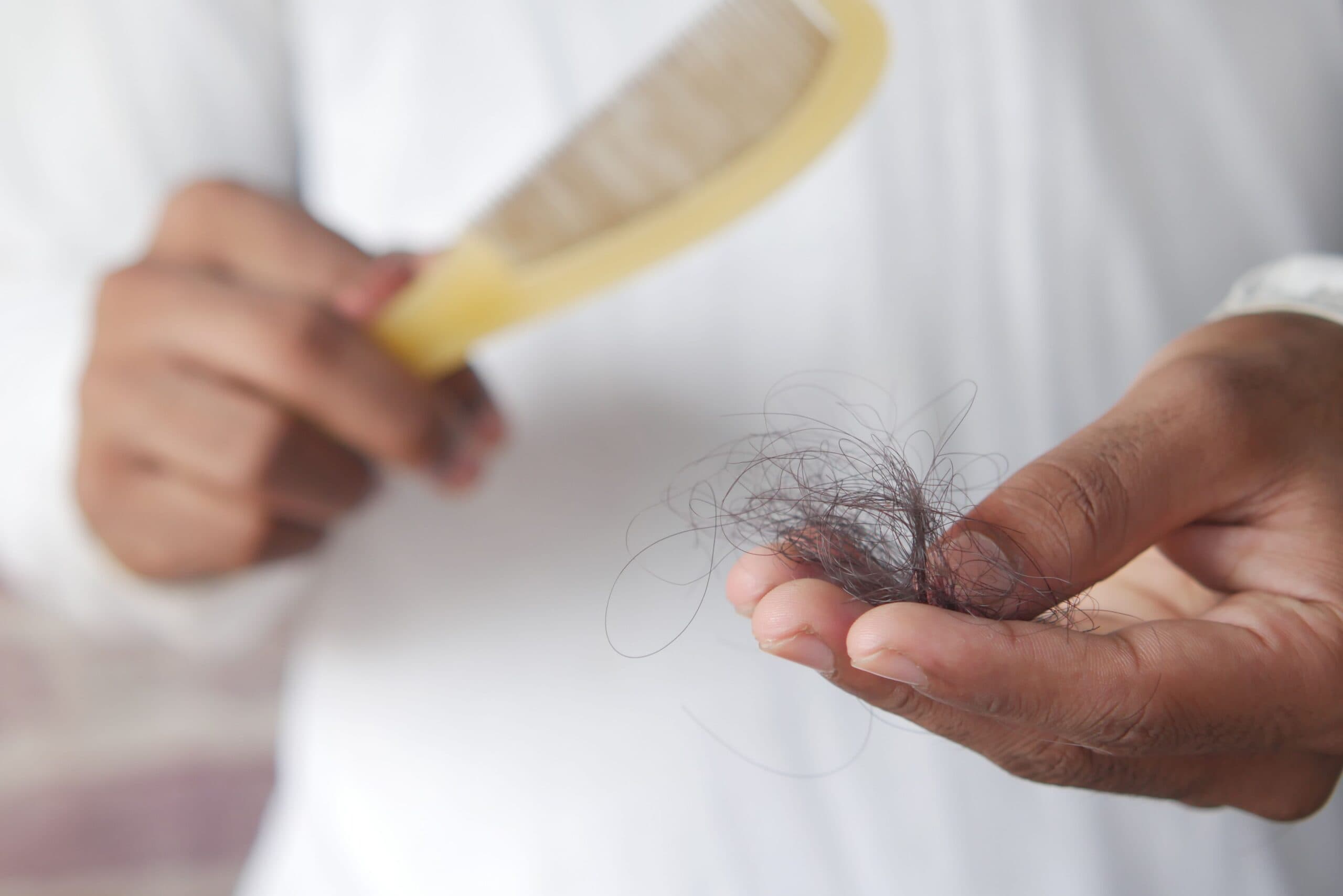
Hair loss can affect confidence as much as appearance. Although several treatments are available, some people want an effective option that acts directly at the scalp without having to take a daily tablet.
Dutasteride mesotherapy is an innovative treatment that delivers dutasteride directly into areas of thinning hair. At The Wright Practice, we combine treatment with a proper medical assessment to make sure it is suitable for your pattern of hair loss.
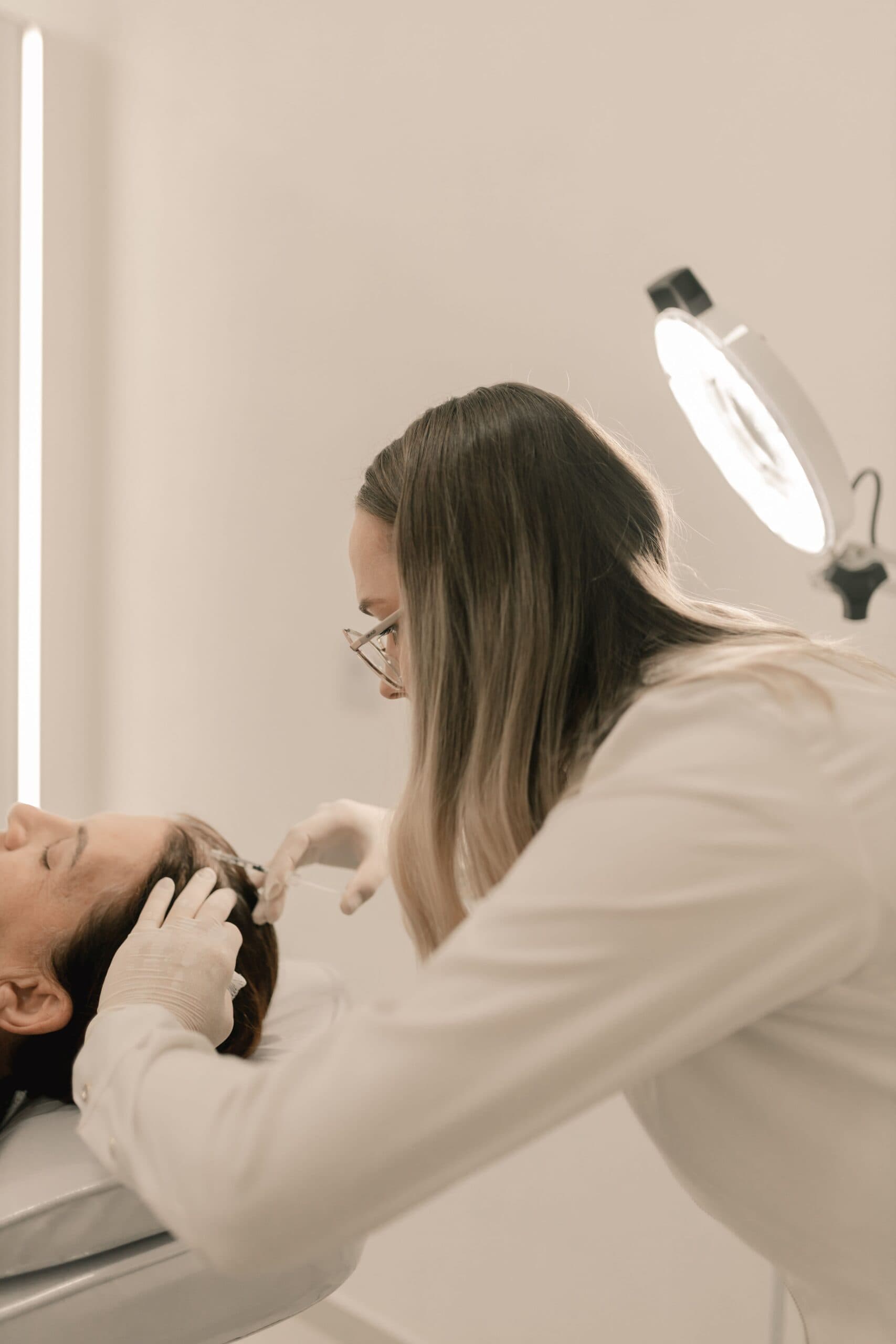
Dutasteride mesotherapy involves placing small amounts of dutasteride into the scalp through a series of fine injections.
Dutasteride reduces levels of dihydrotestosterone, or DHT—the hormone principally responsible for shrinking hair follicles in androgenetic alopecia, commonly known as male or female pattern hair loss.
Delivering the medication directly into the scalp allows us to target the areas of thinning hair while aiming to reduce wider exposure compared with taking dutasteride orally.
Dutasteride blocks an enzyme called 5-alpha reductase, which converts testosterone into DHT.
In people who are genetically susceptible to pattern hair loss, DHT causes hair follicles to become progressively smaller. The hairs produced become finer and shorter, and the scalp gradually becomes more visible.
By reducing DHT activity around the follicles, dutasteride mesotherapy may help to:
Treatment is most likely to help where follicles are thinning but remain active, making earlier assessment worthwhile.
Dutasteride mesotherapy is primarily used for androgenetic alopecia. It may suit adults experiencing:
It may be used alone or alongside treatments such as minoxidil, depending on your pattern of hair loss and individual goals.
Dutasteride mesotherapy is not suitable during pregnancy or breastfeeding, when trying to conceive, or where pregnancy is possible without reliable contraception. It may also be unsuitable for people with certain scalp conditions.

Not all hair loss is caused by DHT. Increased shedding can also be associated with iron deficiency, thyroid problems, illness, stress, hormonal changes, medication or inflammatory scalp conditions.
Your initial consultation therefore includes an assessment of:
Blood tests or specialist dermatology referral may occasionally be recommended if another cause is suspected.

Treatment involves a series of fine injections across the affected areas of the scalp. Appointments are relatively quick, and there is usually little interruption to normal activities afterwards.
Most patients describe mild discomfort during the injections. The scalp may temporarily feel tender or tight, with minor redness, swelling or pinpoint bleeding. Some patients experience a mild headache, but these effects are usually short-lived.
Dutasteride mesotherapy is normally given as a course, with sessions spaced according to your individual treatment plan.
Hair growth is gradual, so results do not appear immediately.
Patients may begin to notice reduced shedding or early improvements after several months. Changes in thickness and density generally become more apparent as treatment continues.
Response varies depending on factors such as:
We recommend taking standardised photographs before treatment so that progress can be reviewed objectively.
As with other effective hair-loss treatments, maintenance may be needed to preserve the results.

Dutasteride mesotherapy is generally well tolerated. The most common side effects are temporary and localised to the scalp, including:
Although the medication is delivered locally, a degree of systemic absorption remains possible. Wider effects associated with dutasteride, including sexual, breast-related or mood symptoms, cannot be completely excluded and will be discussed during your consultation.
Dutasteride mesotherapy is used off-label for hair loss. This means dutasteride is an established medicine but is not specifically licensed in the UK for injection into the scalp. Published evidence is encouraging, and treatment is offered following an individual assessment and informed discussion.

Topical minoxidil remains a well-established treatment for male and female pattern hair loss, while oral finasteride is commonly considered for suitable male patients.
Dutasteride mesotherapy offers a useful additional option for people who:
There is no single ideal treatment for everyone. In many cases, a personalised combination produces the best outcome.

Dutasteride mesotherapy at The Wright Practice starts from £480 per session, including treatment and a review of your progress.
Most patients benefit from a course of sessions followed by individually planned maintenance treatment. We will explain the recommended schedule and overall cost before you begin.

Hair loss treatment should be personal rather than formulaic.
Dr Dan Wright will assess the likely cause and stage of your hair loss, explain the available options and help you decide whether dutasteride mesotherapy, minoxidil, oral treatment or a combination is most likely to achieve your goals.
Your progress will be monitored throughout, allowing the treatment plan to be adjusted when necessary.
It is a treatment that delivers small amounts of dutasteride directly into areas of the scalp affected by pattern hair loss. Dutasteride reduces DHT activity around susceptible hair follicles.
Hair growth takes time. Early changes may become noticeable after several months, with improvements in thickness and density developing gradually over a course of treatment.
Each treatment works differently. Minoxidil and finasteride remain established options, while dutasteride mesotherapy provides a targeted alternative or addition. The best choice depends on your diagnosis, medical history and preferences.
Delivering dutasteride into the scalp aims to reduce wider exposure, but systemic absorption cannot be excluded completely. The potential risks will be discussed before treatment.
It may be considered for carefully selected women with confirmed pattern hair loss. It must not be used during pregnancy or breastfeeding, when trying to conceive, or where pregnancy is possible without reliable contraception.
Usually, yes. Pattern hair loss is a continuing condition, so maintenance treatment may be recommended to preserve the improvement.
Sessions start from £250, including treatment and a progress review. Your recommended course and likely overall cost will be explained at your initial assessment.
Rated ★ ★ ★ ★ ★ from 197 Reviews