
Sweating more than everyone else in the room, even when you’re not hot or stressed, isn’t just bad luck. It may be hyperhidrosis, a recognised medical condition that many people live with for years before realising it has a name, let alone a treatment. At The Wright Practice, we explain what hyperhidrosis actually is, why it happens, and the treatment options that can genuinely help.
A few quick answers before we go into more detail.
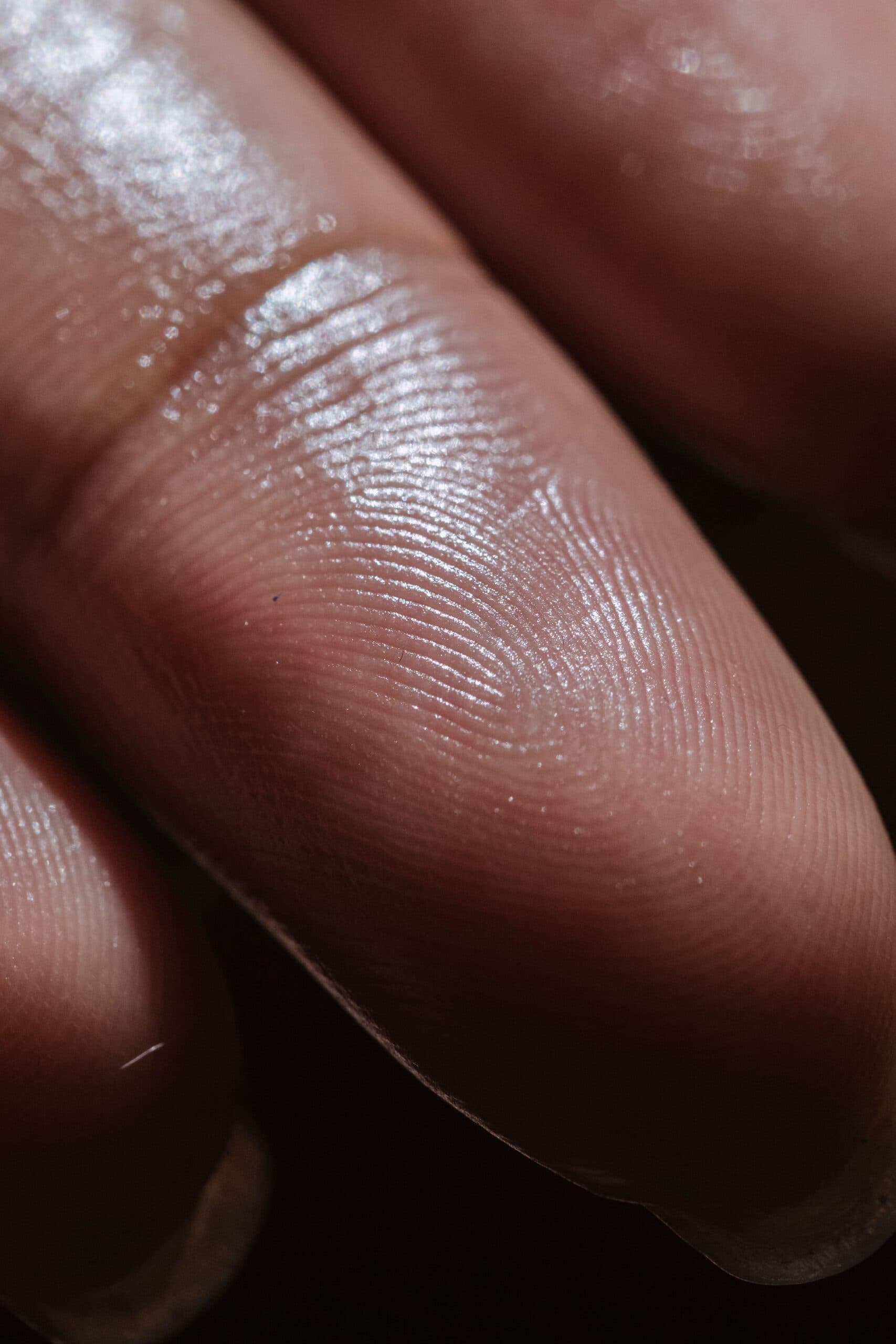
Hyperhidrosis is the medical term for excessive sweating, meaning the body produces sweat far beyond what it needs to keep cool. It’s easy to dismiss as just “sweating a lot”, but for many patients it’s a genuine medical condition with a clear diagnosis and effective treatment options, not simply a personality trait or a lifestyle problem to manage alone.
The distinction that matters most is between normal sweating brought on by heat, exercise or nerves, and hyperhidrosis, which happens regardless of temperature or activity. People with hyperhidrosis don’t have more sweat glands than anyone else. Instead, the nerve signals controlling those glands are oversensitive, triggering sweat production that has nothing to do with actually needing to cool down.

A useful starting point is whether your sweating happens in situations where it shouldn’t. Sweating heavily during a workout or on a hot day is entirely normal. Soaking through a shirt in an air-conditioned meeting, or needing to change socks midway through the day regardless of the weather, points more towards hyperhidrosis.
If several of these sound familiar, it’s worth having an assessment rather than assuming this is simply how your body works.

Hyperhidrosis is usually focal, meaning it affects specific areas rather than the whole body. The underarms, palms and soles are by far the most common sites, though the face and scalp can also be affected.
Many patients have lived with symptoms in one of these areas for years, quietly working around it, before realising there’s a name for what they’re experiencing and effective ways to treat it.
Most cases seen in clinic are primary hyperhidrosis, where no underlying illness is found and the cause is thought to relate to overactive signalling in the nervous system controlling the sweat glands. It often runs in families and typically starts in childhood or adolescence.
A smaller number of cases are secondary hyperhidrosis, where excess sweating is linked to an underlying condition or medication, such as thyroid problems or certain antidepressants. Secondary hyperhidrosis tends to affect the whole body rather than specific areas, and often starts later in life. Your clinician at The Wright Practice will ask about your history and, where relevant, arrange further investigation to rule out an underlying cause.

There’s no single blood test for hyperhidrosis. Diagnosis is largely based on your history, including how long you’ve had symptoms, which areas are affected, and how much they interfere with daily life. Your clinician will also check for any signs pointing towards a secondary cause that might need separate investigation or treatment.
Hyperhidrosis treatment sits within our wider minor procedures and medical treatments service, so your assessment can also flag any other minor procedures that might be relevant to you.
Treatment for hyperhidrosis is usually stepped, starting with simpler options and escalating if these don’t give enough relief.
Injectable treatment tends to be the most effective option for underarm, palm and sole hyperhidrosis that hasn’t responded to antiperspirants, typically reducing sweating in the treated area by more than 80%. Effects generally last around six months before symptoms gradually return and treatment can be repeated.

Your first appointment focuses on understanding your symptoms properly, not jumping straight to a specific treatment. Your clinician will ask about which areas are affected, how long you’ve had symptoms, what you’ve already tried, and how much impact it’s having day to day.
If injectable treatment is appropriate, this is usually arranged as a separate appointment. Local anaesthetic is used beforehand to keep the process comfortable, there’s no downtime afterwards, and most patients return to their normal activities the same day. Your clinician will talk you through exactly what to expect before you decide whether to go ahead.
Treatments for hyperhidrosis are generally well tolerated, with most side effects being mild and short-lived.
Injectable treatment reduces sweating specifically in the treated area, and normal sweating elsewhere in the body is unaffected, so the rest of your body continues to regulate temperature as usual.
The cost of hyperhidrosis treatment at The Wright Practice depends on which areas are affected and which treatment is most appropriate for you. This typically includes your initial assessment and, where relevant, the treatment session itself. Book a consultation for a tailored quote based on your specific symptoms.
“Hyperhidrosis is often called the silent handicap, because so many patients live with it quietly for years before seeking help,” says Dr Dan Wright. “It’s a genuine medical condition, not something to just put up with, and effective treatments are available. We take the time to understand how symptoms are affecting daily life before recommending an approach, rather than jumping straight to the most intensive option.”
This same considered, stepped approach runs across every consultation at our Harley Street clinic, including the full range of minor procedures and medical treatments we offer.

Normal sweating happens in response to heat, exercise or nerves and settles once the trigger passes. Hyperhidrosis causes sweating well beyond what’s needed to cool the body, often with no clear trigger at all, and typically affects both sides of the body symmetrically.
Most cases are primary hyperhidrosis, with no underlying illness involved. A smaller number of cases are secondary to a medical condition or medication. Your clinician at The Wright Practice will ask about your history to check whether further investigation is needed.
There’s currently no permanent cure for hyperhidrosis, but treatment can manage it very effectively. Injectable treatment, for example, typically reduces sweating in the treated area by more than 80% for around six months at a time.
Most patients notice a reduction in sweating within a few days of treatment, with full effect usually apparent within one to two weeks. Results typically last around six months before symptoms gradually return and the treatment can be repeated.
For most patients, no. Treated areas make up a very small proportion of the body’s total sweat glands, so reducing sweating there doesn’t meaningfully affect the body’s ability to regulate temperature overall.
Primary hyperhidrosis commonly starts in childhood or the teenage years, often with a family history of similar symptoms. Secondary hyperhidrosis, linked to an underlying condition or medication, tends to start later in life.
Prescription-strength antiperspirants are usually a sensible first step, particularly for milder symptoms. Your clinician at The Wright Practice will discuss whether it’s reasonable to move straight to injectable treatment based on how severe your symptoms are.
Local anaesthetic is used before injectable treatment to keep the process as comfortable as possible. Most patients describe mild discomfort rather than significant pain, and there’s no downtime afterwards.
Yes. Palmar hyperhidrosis, affecting the hands, is one of the most common forms and can make everyday tasks like handshakes, paperwork or using a phone genuinely difficult. It’s treated using the same range of options as underarm and sole hyperhidrosis.
If sweating is happening regularly without an obvious trigger, affects both sides of your body, or is impacting your confidence and daily activities, it’s worth booking an assessment with The Wright Practice rather than continuing to manage it alone.
Hyperhidrosis is a recognised medical condition with genuinely effective treatment, not something you need to simply live with. Book a consultation with The Wright Practice today to talk through what might help.
Rated ★ ★ ★ ★ ★ from 197 Reviews