
If you are comparing dutasteride, PRP and laser for hair loss, you have probably found that each one is promoted as the answer. In reality, the right choice depends on why you are losing hair. At The Wright Practice, we begin with diagnosis and then explain, honestly, what each option can and cannot do.
Start with a diagnosis, because treatments for pattern hair loss will not help hair shed after illness, low iron or a thyroid problem. Once the cause is clear, medical treatment is usually the foundation, with other options added if needed.
Our hair loss assessment and treatment page explains how we investigate, and our medical hair loss treatments page covers the main prescription options.
Dutasteride works by blocking the enzyme that turns testosterone into DHT (dihydrotestosterone), a hormone that gradually shrinks sensitive hair follicles in pattern hair loss. It blocks two forms of this enzyme, where finasteride blocks one.
A 2023 review of placebo-controlled trials in men found dutasteride among the treatments giving the largest gain in hair density. The review was small, though, and the benefit levelled off after the first few months. It is licensed in the UK for prostate enlargement, not hair loss, so using it for hair is off-label and needs a clear conversation about risks. Side effects can include reduced sex drive and erectile difficulty in some men.
You can read how it is delivered into the scalp in our guide to dutasteride mesotherapy for hair loss.

This table is a general guide. Where the evidence is thin, we say so.
| Option | How it works | What the evidence suggests | Main cautions |
|---|---|---|---|
Dutasteride (oral or scalp mesotherapy) | Blocks both types of the enzyme that makes DHT, the hormone that shrinks genetically sensitive follicles | In a 2023 review of trials in men, it showed one of the largest gains in hair density. Trials were small | Unlicensed for hair loss in the UK. Possible sexual side effects. Needs ongoing use |
PRP (platelet rich plasma) | Growth factors from your own platelets may stimulate follicles | Promising for some, but protocols vary widely and trials were too few for that review to rank it | Results vary. Several sessions are usually needed, then maintenance |
Low-level laser therapy | Red light devices aim to stimulate follicles at home or in clinic | Showed gains in the same review, though trials were short and often industry funded | Needs consistent use. Not a replacement for medical treatment |
Finasteride and minoxidil | Finasteride lowers DHT. Minoxidil widens blood flow to follicles | Well established, with long track records, and often used as the foundation | Finasteride can affect mood and sexual function in some men. Minoxidil can cause shedding at the start |
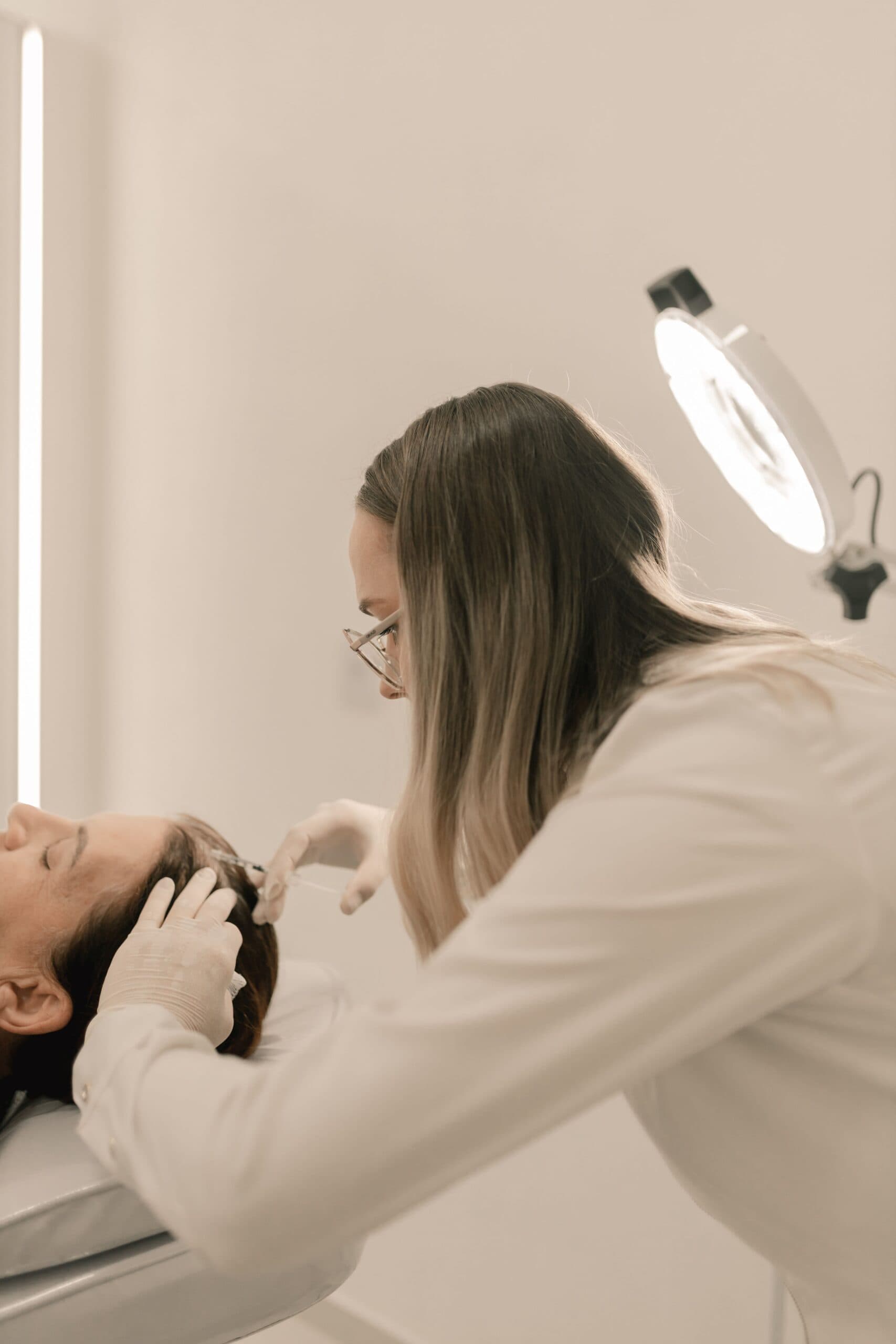
PRP may help some people, but the evidence is mixed and not yet strong enough to rank it against other treatments. A sample of your blood is spun to concentrate platelets, which contain growth factors (natural signals that support repair). This is injected into the scalp.
Most people need a short course of sessions and then maintenance. Because methods differ between clinics, results are hard to compare. We usually see it as an addition to medical treatment, not a substitute.
Our page on platelet rich plasma and our advanced hair restoration treatments explain more.
Low-level laser therapy uses red light, in a cap or comb, to stimulate follicles. Some trials suggest it can improve hair density in men and women, but studies are short and often funded by makers of the devices.
It needs regular use over months, and it is not a replacement for medical treatment. It may suit people who prefer to avoid medication, as long as they understand the limits of the evidence.


Yes, and many people do. Because dutasteride, minoxidil, PRP and laser work in different ways, a combination can make sense. A scalp assessment decides the starting point, and we add options gradually so you can see what is working.

The cost depends on which treatments are recommended and how often they are needed. This is confirmed after your assessment. Book a consultation for a tailored quote.

“There is no single best hair loss treatment,” says Dr Dan Wright. “The aim is to understand why you are losing hair, explain what the evidence does and does not show, and build a plan you can sustain.”
This reflects our wider approach at our Harley Street clinic.
Dutasteride blocks two forms of the enzyme that makes DHT, while finasteride blocks one, so it lowers DHT more strongly. Some trials suggest a bigger benefit, but dutasteride is unlicensed for hair loss in the UK and may carry a higher chance of side effects. Your doctor can explain whether it is reasonable for you.
Yes, many people combine treatments, because they work in different ways. A common plan uses a DHT blocker as the foundation and PRP or mesotherapy alongside it. Your doctor at The Wright Practice will suggest a combination only if your scalp assessment supports it.
Most people need at least three to six months to see a change, and a year to judge the full effect. Early on, some shedding can happen. Stopping treatment usually allows hair loss to resume.
Some patients see thicker hair after a course of PRP, but the research is mixed and methods differ between clinics. It is best seen as a supporting treatment, not a stand-alone cure. We are open about this at The Wright Practice.
Trials suggest low-level laser devices may improve hair density in some people, but studies are short and often funded by manufacturers. They need regular use to have any effect. They are not a replacement for medical treatment.
Delivering dutasteride into the scalp aims to act locally, but some of the drug can still reach the bloodstream, so side effects cannot be ruled out. We explain the limits of the evidence in our blog on dutasteride mesotherapy. Your doctor will talk through the risks with you.
Dutasteride is generally not used in women who could become pregnant, and it is mainly studied in men. PRP, laser and minoxidil are options in women, after hormones, iron and thyroid levels are checked. Female hair loss usually needs a broader assessment.
Often, yes. Low iron, thyroid problems and hormone changes can cause or worsen hair loss, and treating them may help. Tests also help your doctor choose safely between options.
Pattern hair loss tends to follow a recognisable shape, such as a receding hairline and thinning crown in men, or widening of the parting in women. A scalp examination and your history help confirm it, and rule out other causes such as shedding after illness or stress.
You can book a consultation online or through the contact page. Appointments are at 101 Harley Street in London. Your doctor will examine your scalp and talk you through the options that fit your pattern of hair loss.
The right hair loss treatment starts with the right diagnosis. Book a consultation with The Wright Practice to find the plan that suits you.




Rated ★ ★ ★ ★ ★ from 197 Reviews