Written by Dr. Daniel Wright
HIV is something many people worry about after a possible exposure, but relatively few understand what early infection actually looks like, or when testing becomes meaningful. The honest answer is that the early signs are unreliable, and the timing of a test matters as much as the result.
This post explains the early symptoms of HIV, why they can be misleading, when different types of test give reliable results, and what to do if you have been recently exposed. Dr Dan Wright sees patients at The Wright Practice’s Harley Street clinic for both HIV testing and urgent PEP assessment.
When HIV first enters the body, most people go through a phase called acute retroviral syndrome, or ARS. This usually happens two to four weeks after exposure and reflects the immune system’s initial response to the virus.
The problem is that ARS symptoms closely resemble a standard viral illness. Fever, fatigue, a sore throat, swollen glands and a rash are common, but they are also common to flu, glandular fever and a dozen other infections. There is no symptom that reliably indicates HIV rather than a common cold.
More importantly, a significant proportion of people with early HIV infection have no symptoms at all. The absence of symptoms does not mean absence of infection. This is the most important thing to understand: symptoms are not a reliable screening tool.
Different tests have different window periods — the time between infection and when a test can reliably detect it. Testing too early can produce a false negative, which can be falsely reassuring.
| Test type | Earliest reliable result | When to use it | Available at TWP |
|---|---|---|---|
4th-gen HIV duo test(antigen + antibody) | 28 days | Standard early test. Detects the virus and antibodies. Most common option. | Yes |
PCR / RNA early detection test | 10 days | For very early detection. Useful when you need an earlier answer. | Yes |
Rapid HIV INSTI test (antibody only) | 90 days | Fast result (1 min). Good for routine checks, not for post-exposure testing. | Yes |
Confirmatory test | 12 weeks | Final confirmation. Recommended after any significant exposure. | Yes |
If fewer than 72 hours have passed since a possible exposure, PEP (post-exposure prophylaxis) may be an option. PEP is a 28-day course of antiretroviral medication that can prevent HIV from establishing itself in the body if started promptly.
PEP is time-critical. If you think you may need it, contact The Wright Practice today or go to your nearest A&E if it is outside clinic hours. Do not wait to see whether symptoms develop.
If fewer than 72 hours have passed since a possible exposure, contact us today about a PEP assessment.
After 72 hours: PEP is no longer appropriate. Book an HIV test at 28 days.
HIV testing should not be reserved only for moments of acute worry. Regular testing is relevant for:
At The Wright Practice, HIV testing is available as a standalone test or as part of a full sexual health screen. Results are typically available the same day or the following day, with all findings discussed with Dr Dan Wright in a confidential consultation.
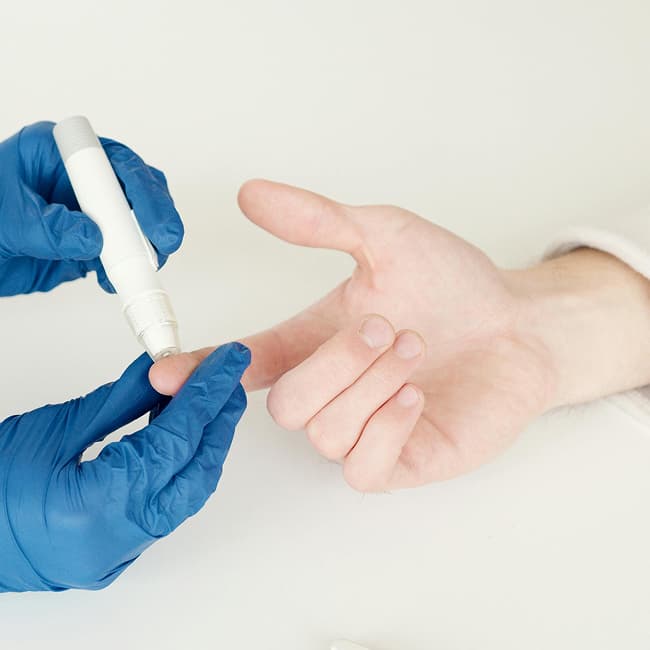
A small blood sample is taken in clinic. The 4th-generation HIV duo test detects both the HIV antigen (the virus protein itself) and HIV antibodies (the body’s immune response), which increases sensitivity during the early window period after infection.
Results are discussed with Dr Dan the same day or next day. If a test comes back reactive, a confirmatory test is performed before any conclusions are drawn. A positive result leads directly to a referral to a specialist HIV clinic, which Dr Dan coordinates. There is no reason to put off testing: knowing your status early makes a substantial difference to treatment outcomes and prevents unknowing transmission to others.

HIV testing at our Harley Street clinic is confidential, same-day and discussed directly with Dr Dan Wright. Whether you need a routine check, a post-exposure test or an urgent PEP assessment, we can see you quickly.
The earliest signs, known as acute retroviral syndrome (ARS), typically appear two to four weeks after exposure and can include fever, fatigue, a sore throat and swollen lymph nodes. However, these symptoms are identical to many common viral infections, and a significant proportion of people have no symptoms at all. Testing is the only reliable indicator.
The 4th-generation HIV duo test gives a reliable result from 28 days after exposure. The HIV PCR test can detect infection from around 10 days. A final confirmatory test at 12 weeks is recommended after any significant exposure, even if earlier tests are negative.
If it has been fewer than 72 hours since the exposure, contact The Wright Practice or go to your nearest A&E to be assessed for PEP, a 28-day course of medication that can prevent HIV if started promptly. If more than 72 hours have passed, book an HIV test at 28 days after exposure.
Yes. Many people with HIV have no symptoms for years after the early acute phase. Regular HIV testing is important for anyone at ongoing risk. HIV is highly treatable when caught early, and treatment allows most people to live a normal, healthy life.
Yes. All consultations and test results are completely confidential. We do not share information with your NHS GP, employer or anyone else without your explicit consent. Results are discussed directly with Dr Dan Wright in a private consultation.
Rated ★ ★ ★ ★ ★ from 197 Reviews